martedì 19 febbraio 2019

Day 4: From the mountains to Kyoto

After a night of sound sleep, we wake up with the sound of the rain. We don't need to open the windows to understand it is raining, and we are glad our route for today is rather short, having only to reach Kyoto.


When we are having the fantastic breakfast served by Ryoso Chatani (all but the natto, we are not yet ready for it), we decide that we will take route 40 instead of highway 367 to reach Kyoto. Since it is smaller we are sure we will find less traffic on it, and considering the rainy weather this is something we surely want.

We wear our rain gears and get on the road: route 40 starts shortly after the place where we are, and quickly climb up the mountains. The vegetation is so thick it almost looks like the road is going to disappear soon, and when we reach the pass the rain has stopped. But since from now it is all downhill and we are sweaty from the climb, some additional covering doesn't hurt, so we leave our rain gears on.


We pass through small villages where again our presence tingles the curiosity of all the kids going to school, no matter if they are walking, cycling or sitting in the school bus. But the idyllic scenery is quickly over, as soon as we place our wheels in Kyoto.

Though there are always broad sidewalks where we can bike, the problems are given by the crowds of tourists: they step out from the buses noses in the sky and not giving a damn of where they are going and who might be in route of collision with them. With the panniers on the side of our bikes we cannot always zig-zag, and more often than not we have to stop and let the mass flow.


We therefore decide to reach our destination, leave the bikes and the panniers and walk around. When we are a couple of kilometers from our place, we have to pass over the railway, and we take a bridge which seems to serve our scope. We are not even halfway that a police car is behind us, asking to stop at the end of the bridge. When we do two policemen come out of the car and first ask for our passports and then why we took the bridge when it was forbidden to bicycles. We have clearly missed the sign on the other side, and we deeply apologize with them trying to explain what happened. They ask us some more questions then let us go.


After passing the Arashiyama bridge we reach Mulan Hostel, where we are lodged today. We are way earlier than the check in time, but the staff is really kind and let us in, allow us to change our clothes and park our panniers in the lobby even though the room is yet to be prepared.


We then walk out to visit the neighborhood, going first to Horinji temple. From there we search for our lunch, and after wandering around we find a promising place: it's called Arashiyama Curry, immediately South of Saga-Arashiyama station and we will find out that they make a really superb curry.


When we sit at the table we are the only two customers in the place, and notice they have a Mikan puppet on the counter. Upon asking them if they come from Ehime, they are pleased we have recognized Mikan, and explain us their relationship with that prefecture of Shikoku; I don't remember whether they are born there, or if their son is studying there.


While we eat our curries more customers come in, and when we are about to leave the place is pretty crowded.

From there we move to the Tenryuji temple and then to the bamboo groove. Walking through the high plants makes us really feel tiny, and we easily forget about the crowd present in the place.


We get back to the hostel to grab the towels and then reach the public bath: today we have decided to use the nearby onsen to relax. The place is really nice and not too crowded, and also the rest area at the exit of the bath is pleasant, with tatami floor, manga, newsapapers, tv and free drinks.

Regenerated by the warm bath, we buy our dinner and return to the hostel, where we sit in the dining room together with other guests while eating our food: traditional Japanese houses are nice, but also modern buildings like this one have their appeal and comfort.


We get back in our room, dive into the western style beds and quickly fall asleep.

domenica 17 febbraio 2019

Day 3: closing the loop around Lake Biwa and approaching Kyoto

A hand knocks on the fusuma, waking us up.

When we reach the living room, an old man wishes us a good morning, while busy in the kitchen preparing our breakfast. Still numb from the sleep, seeing him moving back and forth rapidly and precisely is like getting an injection of adrenaline.


Thin sliced salad with sesame dressing and tomatoes, scrambled eggs with sausages, Hōjicha:this is our breakfast today. While we consume it we discuss about our route for the day: we have read that the South-West side of lake Biwa is not that pleasant to bike, therefore we have decided to follow the coast for a while and then, via route 23, reach route 367 which goes in the valley between two mountain ranges. 

Though it is a highway we have seen that there are often side roads which should allow us escaping the traffic if we would feel the need. And then we will have the rain, so we want to ride us much as possible before it starts pouring.

Therefore we prepare our bikes, bid farewell to the landlord and hit the road. From the guest house to the lake side the distance is short, but when we reach it we have to stop to enjoy the scenery: a long row of trees, behind which the mist covered lake surface, flat like a mirror, unveils in the distance mountain ranges and cities.


We stop on the sand to take some pictures, and then move on. The magnificent landscape we have just seen has boosted our energy, and we move in the waking up villages with a good vibe.


When kids start to crowd the roads going to school, attracting their attention is unavoidable. Two of them, more daring, ride next to us on their white bikes. The bravest of the two holds his courage and greets us with a "Herro!". When we answer with a smile and with an "Hello!" he goes a step further, asking us "Do you rike sushi?", to which we answer "Yes, also miso ramen!". This makes them laugh, and they wave their hands when they proceed to their school, where we are sure this small adventure they have lived will be the topic of the day.


Outside the villages the road is pretty much deserted: the only people we meet are workers busy repairing the shoulder here and there. When we reach Adogawa and take route 23, the landscape quickly changes. 


Though the road is not extremely steep, the landscape quickly turn mountainous, with tall conifers, continuous zig-zag and a drop of the temperature. When we reach Takara Bokujo I stop at a gas station to inflate the tires of my bike. I gesture toward the clerk that the tire is deflated, and he asks me to give him the pump of the bike. Quite puzzled I hand it to him, and when he tries to use it, I ask him if he as a compressor. He then takes a tank of compressed air and inflates the tire. Talk about spirit of service!


For a good part of the 367 the traffic is never too heavy, and we can enjoy the surrounding. We take a break at a combini, where we are greeted by a couple of bikers who are also taking a break. Then a curious old man comes close, asking us where do we come from and where we are going. Considering that ahead we are not sure to find other shops, we also buy our lunch.

Shortly after we are back on the saddle it starts raining: first in a gentle and seamless manner, then heavily. Because of the rain we don't stop at any of the temples along the itinerary: they are not visible along the road, and we don't want to get lost in the woods under the rain.


At a certain point we find the side road departing from the highway, and we take it. When it goes under the highway we stop under the bridge and decide to have lunch there: there is no traffic, the Keishoji temple is somewhere in the forest but not easy to reach and we want some rest.

While hearing the pouring of the rain from the sky and the roaring of the river below, we study the road ahead. Soon after the pass we should be able to go around the highway by riding through the village grown around it. 


Finished our onigiri we get back on the bikes, but after a short while we have to stop: the road is flooded by the river with trees and rocks blocking it. Probably a souvenir of the typhoon, low in the priority list of the recovery intervention. 

Back on the highway, then we reach the pass and descend the 4 hairpins: the view is fantastic, but the road is really wet and we don't want to fly below, therefore we have to pay the utmost attention to where we put our wheels and cannot really enjoy it.

Once in the village we have to climb a steep road before getting back on the highway, then we finally manage to enter the road which, after a few kilometers, will take us to our lodging. It proceeds on the mountain side, through houses which are mostly abandoned.

When we finally reach Ryoso Chatani it is still raining, and after having parked our bikes in the garage, we ask the staff some old newspaper to wipe dry our bags and clothes before entering our room. Then we soak in the ofuro, before heading out to buy our dinner. 


The rain is gone, and the countryside where we walk in the dark is filled by the noise of the frogs. Out in the distance after the mountains the lights of Kyoto shine on the clouds. Tomorrow we will be there.

venerdì 15 febbraio 2019

Day 2: The metasequoia avenue in Machino

The sun is starting to rise when we wake up and get downstairs for breakfast. We have some minutes to take a walk around the place and admire the magnificent look of the building, which was hidden by the darkness yesterday evening.


We get on the bikes and start our ride, together with many students getting on their way to school. As soon as possible we leave the main road and take the cycle route taking us along the small Sainoko lake, where several old people are fishing. They look quite surprised to see us when we greet them.

Our first goal is Azuchi castle, but before we reach it we notice a small problem on one of the bike: the rear tire is twisted, and we get in touch with Globalwheels to ask for advice. They suggest us a couple of shops which can fix the tire for us, and we head for the closest one, even though it means we have to go in the opposite direction.


On the way we stop to visit Kōmyōji Temple, which is still empty due to the early hour, then when we search our way in the village we have the chance of practicing our Japanese asking for directions to two elderly men. We have happen to surprise a small kid on his way to school with his mother, who apparently has never seen two foreigners on bike. From the smile on his face he must have been pleased by the surprise.


When we finally reach the bike shop, we wait until they fix the problem and use the break to plan our route ahead. After Azuchi castle we will also stop at Hikone castle, and, considering the time we are losing with this unexpected break, we will then take the train to cover part of the road until our destination in Machino.


Once the bike is fixed we get back on the road, and in short time we reach the ruins of Azuchi castle.  It takes some time for use to realize which are the remains among the vegetation, but then we understand the size of the castle.


After getting lost among the rice fields, we manage to reach the lake coast, and from there proceed in the direction of Hikone. The villages we cross along the road seems to be empty, and several houses are clearly abandoned. It all gives the impression of a place which is lively during summer months, when the lake is a touristic destination, but then deserted for the rest of the year.


When we finally reach Hikone, at a crossing we ask for direction to an old lady. She tell us to follow her, and start running in the direction of the castle. For being an old lady she runs pretty fast, and we have to keep a steady pace to not lose her, even though we are on our bikes. She stops next to the bridge crossing the castle moat, and tell us to proceed further. We thank her for the guidance, and we venture into the castle park. I am sure that if we would have been in the opposite situation, with her running behind us, the police would have been glad to ask us some questions.


There are quite some people visiting it, and we find a salary man, having his lunch break there, who can speak a good English. He tells us that it's not possible to climb on the castle with the bikes and that the visit takes at least 1 and half hour. We decide to skip it, and we sit in the park to have our lunch.


After lunch we proceed to Nagahama, where we want to take the train. Our first surprise there is to see a lot of boards and signals in Portuguese. Apparently there is a large Brazilian community, which explain it. When we finally reach the station we have about 20 minutes before our train departs. We have the rinko bags, supplied with the bikes, but we have never attempted using them. Gareth explained us, but apparently we didn't listen well, because after ten minutes, during which I am pretty sure we look like a couple of Donald Ducks fighting (and losing) with a plastic bag, we still haven't managed to wrap the bikes.There is always some part of the bike sticking out of the bag!

One of the two guys at the ticket counter is probably moved to mercy and, after having found in on the internet, prints the instructions and help us packing the bikes. We are really grateful for his help, and we finally manage to reach the platform few minutes before the train arrives. We take it and during the trip have some chat in a broken mix of English and Japanese with a Japanese man, who asks us about our trip. He works in something related to organic chemistry, I assume, since he lists the first hydrocarbons, and he is also an amateur radio operator, from what we see on the business card he hands us.


He gets down with us at Makino, and from there we greet each other. We mount back our bikes and head to the metasequoia avenue, a famous road, few kilometers long, with about 500 dawn redwoods planted along it. We reach it when the sun is about to set, and there are plenty of tourists taking pictures, even right in the middle of the road.


We also take some pictures, and then move toward the minshuku where we are spending the night, Shanshui House. We are the only guests for the night, the landlord shows us around and offers to take us to some restaurant nearby, but we prefer to buy some food from a combini. After the shower we get back on our bike and reach the nearest combini.


It's few kilometers away and the road is pretty dark, but not particularly complicated. On the way back we first hit a swarm of mosquitoes (luckily our mouths where shut, else we would have had our daily dose of proteins), then we see a night train running through the night: the row of lights traveling fast on the dark countryside, reminds us of the train in Spirited Away.


We have our dinner in the living room of the pretty big minshuku, then we watch some TV: tomorrow the forecasts tell rain, so we have to deal with it. But for now we a roof under which we can sleep, and the crickets are singing outside the window. All is fine.

martedì 12 febbraio 2019

Day 1: from Osaka to Omihachiman

Finally today we start cycling.

After the usual good breakfast we take our luggage with us, drop the key of the house and walk to the pick up place, where Gareth from Globalwheels has prepared our bikes.

It's at walking distance from the guest house, and in few minutes we are there. Gareth has the bike ready for us, and we need just few adjustments to fit them: saddle height, panniers, installation of the handlebar bag and deposit of the baggage, gently agreed by Globalwheels.

Gareth guides us to the bridge on the O river, from where we start our trip. The sun is shining in the sky, and the river banks are full of people doing any type of sport: baseball, running, football, badminton and of course also cycling. We find out that today is something like the national sport day, and of course the Japanese are celebrating it.

The cycling path following the O and then the Yodo river is nice, away from the traffic of the city which is just in the background after the river banks. The only annoyance comes from the way too frequent barriers installed to prevent devices other than bicycles to access the path. They are made in such a way that we have to get down and lift our bikes to pass them, since our panniers prevent us from bunny hopping them.


When we reach the panoramic terrace on the Uji river we leave the cycle path and move into the city to reach lake Biwa. We stop for lunch in a small park, where we eat our onigiri with the only company of several mosquitoes and a little boy on a small bike who try to catch something in the grass while not giving away his curiosity toward us.


We get back on the bike and move on. Until now the road has been pleasant, but as soon as we leave the river we have to find our way among cars, trucks, roads not allowed to bikes and quite unpleasant landscapes. There are not so many path we can take, therefore we cannot be picky.

We somehow manage to reach route 1 to Otsu, but there we have no choice than share the road with the traffic. There is an accident ahead, and the vehicles are almost still. Since we have to go uphill for us it is almost a blessing, not having to worry about cars and trucks speeding few cm from our elbows. On the other hand we get to breathe the exhaust from the queue.

When we finally descend to Otsu we are glad we can fill our lungs with fresh air. We have got a first impression of Lake Biwa by watching the NHK episode of Cycling around Japan, but being there in person is another story.


For a while we proceed along the coast, where there are a lot of people either fishing or barbecuing, then we head inland when the sun is starting to set. Since we had told the hostel that we would have arrived around 6 p.m. we try to find someone who can call them for us.


We stop at a combini and I try to nail the few words of Japanese I know to ask if they can call the place and tell we are late. If only I had reached the part of the Japanese class where they taught that the Japanese word for telling 6 p.m. is not the same 6 as in the number, I would have been quicker. But at the end the guy at the counter manages to understand me, and calls the place.


The landlord tells us it is ok, and just wants to be sure we know the way. It's still 15 km to reach there, and we will arrive with darkness. We reassure him and get back on the saddle.

The road now goes mostly straight through an infinite theory of fields, with here and there some large buildings. The last few kilometers are again on the coast, the dark lake on one side, the countryside on the other with just few cars driving by. When we finally reach the place, the hostel is on the side of the hill, enveloped into complete darkness and with only crickets and frogs filling the night.

We park our bikes and get a shower just in time for dinner: the dishes are freshly prepared with local ingredients and everything is really tasty, and together with us there are three other guests.


The building of Hachiman Youth Hostel is more than one century old, and the wooden frame seems to be breathing memories of a distant past. After dinner we take a walk to the combini close by, where we buy an ice cream, a beer and the necessary for tomorrow breakfast. Then, while the chilled beer relaxes our legs, we sit on the patio, enjoying the fresh air of the night with our eyes wandering in the darkness, broken here and there by some distant light.

We then head upstairs and sink into the futons, getting some rest for tomorrow. The crickets outside quickly fade away into our sleep.


domenica 10 febbraio 2019

Day -1: Okinoshima, or the island which inspired Laputa

Not surprisingly, we wake up pretty early.
After a good breakfast, we walk in the sleepy roads of a Sunday morning Osaka. The only other people walking are also early birds going to catch the train for somewhere. The empty roads seems also resting after a lively Saturday night.

We take the train to Kada, where we will then move to the boat carrying visitors to Okinoshima. The island, right in the middle of the Tomogashimasuido strait, was in the past used as observation point by the Imperial Navy, and the now abandoned buildings give to the place a quite unique atmosphere, which has inspired Studio Ghibli's Laputa, castle in the sky.

The more the train travels South, the more remote the places appears and the less people remain on the train. We see the mountain ranges we will be crossing in the coming days, and they look quite challenging.

But it's still early to worry about that. Today we are walking on a remote island. When we reach Kada the station is really small: a single track and a steel gate, with a small desk with a stamp, of which we are not able to understand the scope. The sun flooded village is really quite, and we walk to the harbor through empty streets.


The dock where the boat boards the visitors is the only busy place. We are the only gaijin to be there, and we have the clear impression it's not so common for two foreigners to be there: the only person in the queue capable of speaking English helps the lady at the ticket counter by translating for her that the boat runs every hour, and the last departure from the island is at 4:00 p.m. 
We buy some drinks and some food, since on the island they are not available, then wait patiently in the queue. 


The boat is packed with people, and the chairs are not exactly sized for a tall westerner. From the windows we see a lot of fishing boats gathered among the waves, and when we finally land on the island we really feel on a remote place.

The traces of the typhoon are still visible: shored garbage, fallen trees and soil carved by the flowing water. Some paths are even closed. Whenever the wind cannot reach, the warm and humid air feels like a cape. We have to measure our effort to not be drenched in sweat.

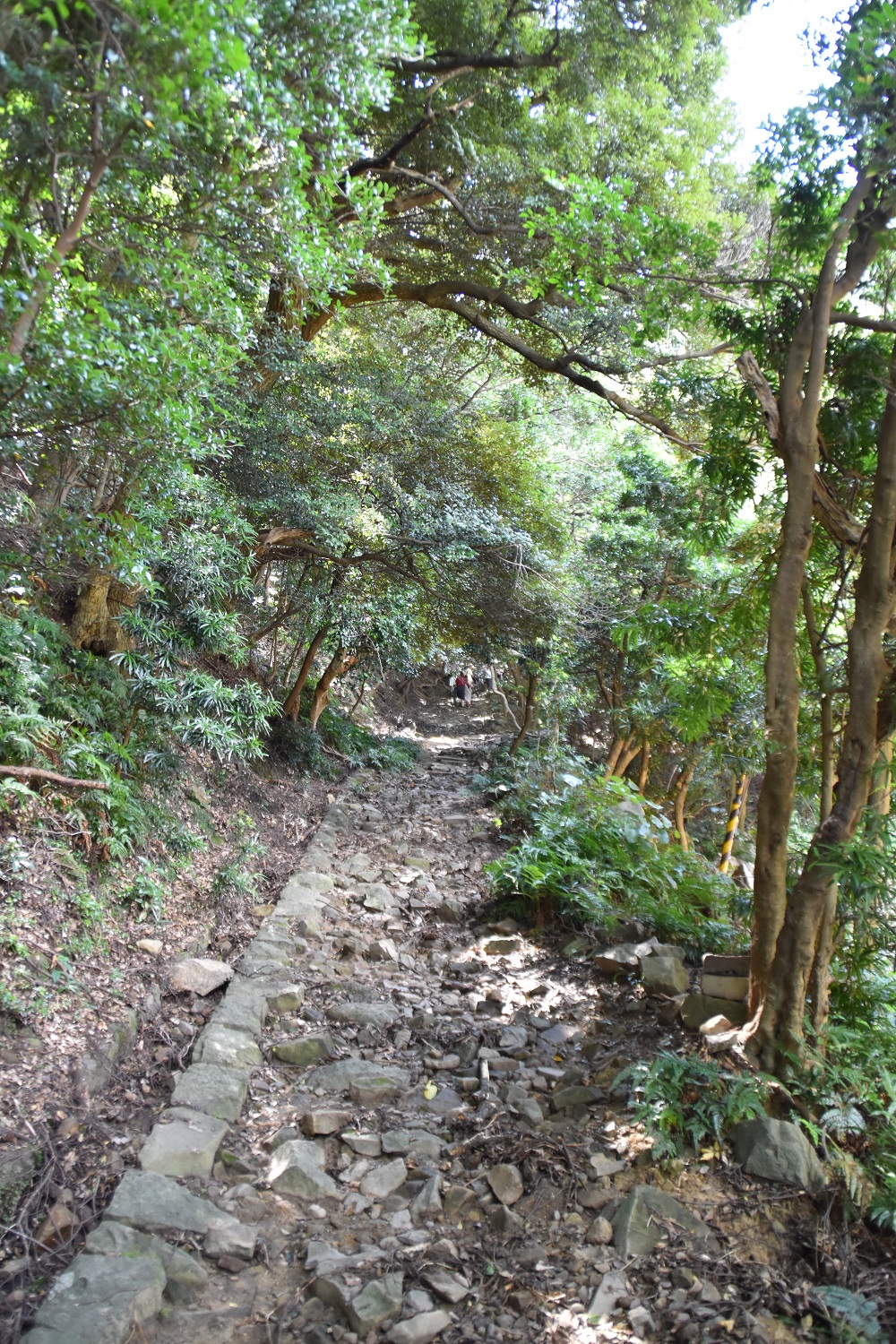
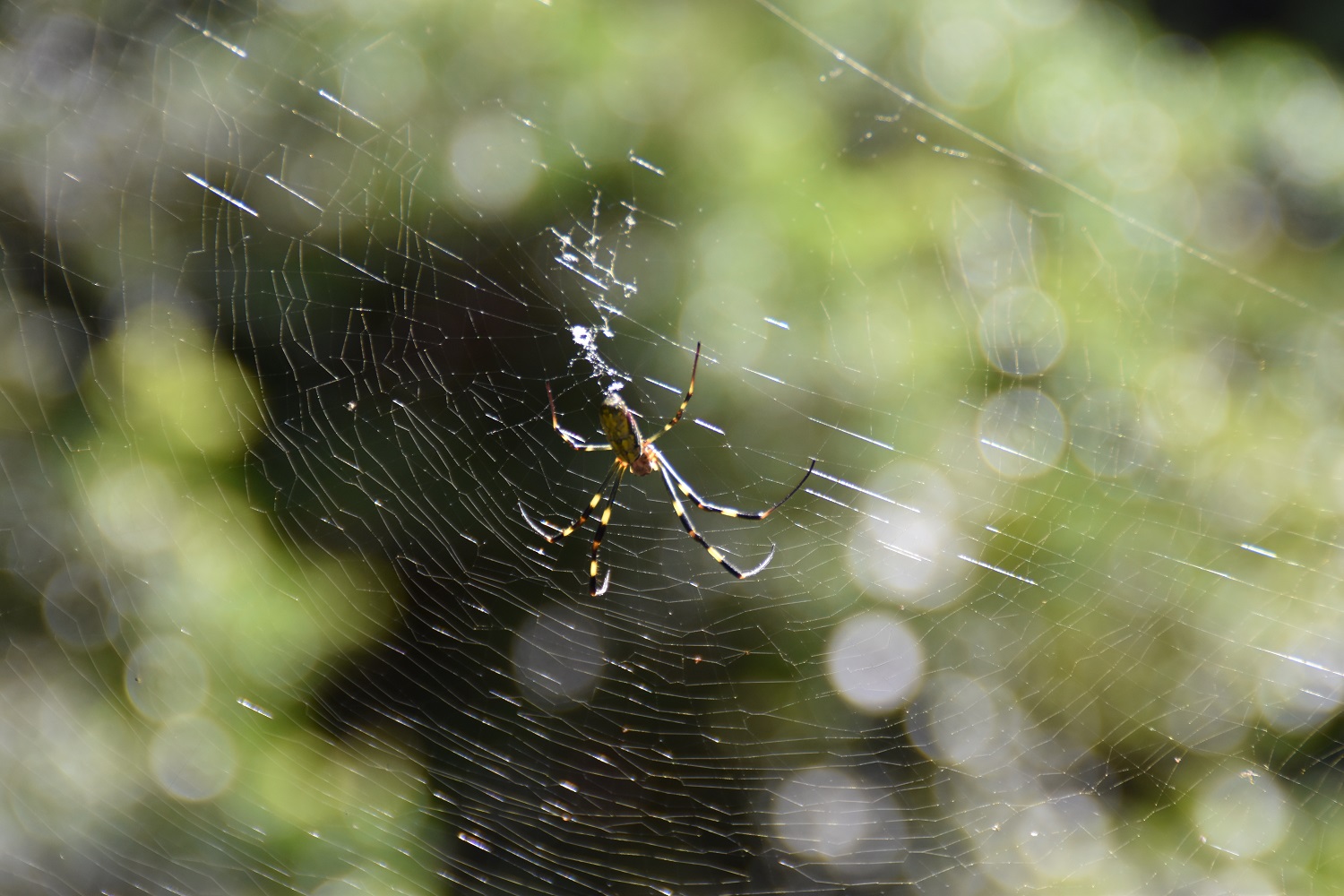
The vegetation is luxurious, and we lose count of how many spiders and giant hornets we spot. The side of the path is also covered by countless apertures looking like caves, but we don't dare venturing in: we have no lights with us. When we finally reach the abandoned buildings on the top of the hill, the place looks magic and the view is astounding. Red bricks buildings, moss and ivy clinging on the moisture dripping walls, with short moments of silence when we are the only to be around.


It's not hard to imagine how the life of a soldier was here, constantly gazing at the horizon and checking the ships crossing the sea, under the sun or under the rain with the constant shouting of the supervisors.


We take a sit on one the benches scattered around and have our lunch there, on the top of the island. While we eat our onigiri, some people prepare a warm noodle cup lighting up a camp burner with a small pan to boil some water.

Continuing on the path circuiting the island we walk by the old lighthouse building, which cannot be accessed, and then find the ruins of some restaurant. We cannot tell if it has been damaged by the recent typhoon or has it been abandoned years ago. In any case its gloomy appearance strikes with the solemnity of the red bricks ruins.


We reach the pier with just few minutes before the boat departure, which we spend sitting below some pine trees. Once we manage to reach the station, we have the luck of boarding the Medetai train, which is a train painted like a sea bream. The stamp we found at the station was about this train, as we realize now.


Since it is still quite early, we decide on the spot to use that train to reach the station of Wakayamashi, and from there the Castle of Wakayama. The next time that we will be in the city it will be on our bikes and we don't know how much time we will have for visiting around, therefore we want to be sure to have a calm visit to the monument.

The surrounding of the castle are full of people busy arranging many small candles according to some predefined path. Apparently there is going to be some sort of festival in the night, involving images made with candles. As another shot of luck, today is the day when access to the castle is free, therefore we don't miss the chance of visiting it.


The museum inside is interesting, and the view from the top, with sun starting to set on the bay, is amazing. We regret that we have to leave before the festival begins, but we are glad we have been able to enjoy the place.

The train goes back across the mountain ranges and then into Osaka, and sooner than expected we are back to the busy Sunday evening of a big city. On the way back to the guest house we stop for dinner at a small restaurant specialized in tonkatsu. The only interaction with the staff is when we give them the tickets we bought at the vending machines to order our dinner, and when they bring the dishes at our table. For the rest we are basically alone, with other customers having their dinner without paying attention to the humanity surrounding them.

We walk back to the guest house in the pleasant chill of the evening, we buy some snacks at the combini and then prepare as much as possible for the next morning. Tomorrow is the day we will pick up our bikes. Tomorrow we will hit the road.

sabato 9 febbraio 2019

Day -2: Cycling Kansai.

Welcome back!

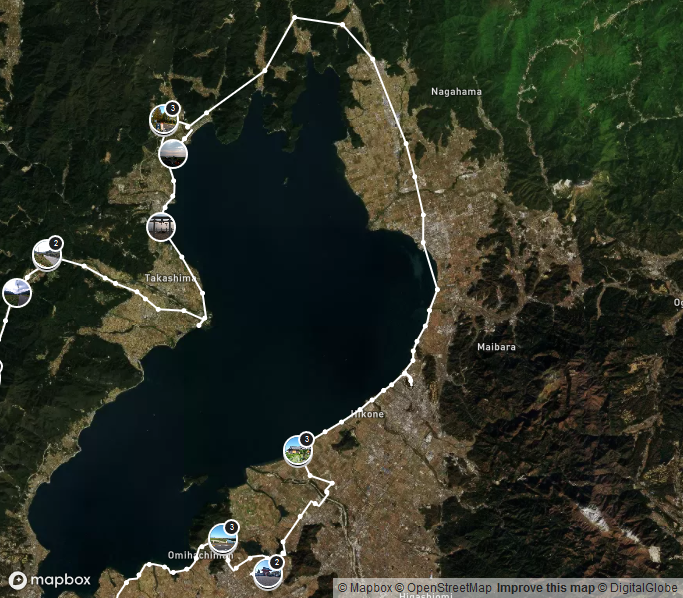
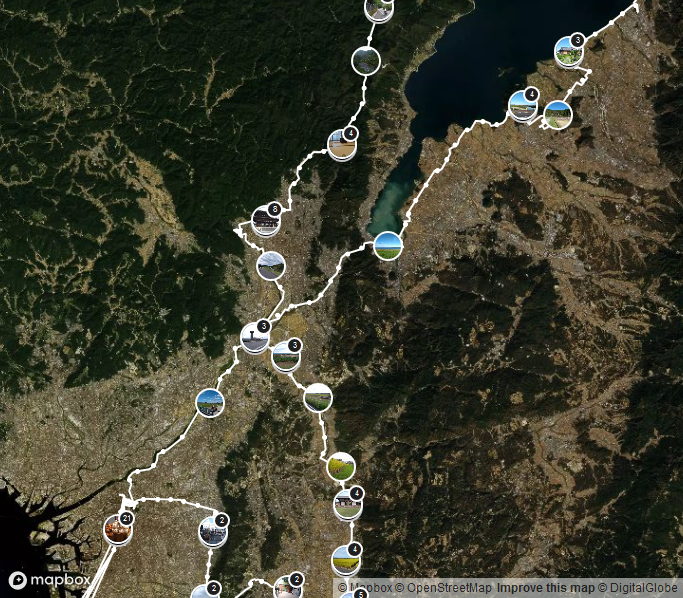
We have been again on a cycling vacation in Japan, which has seen us pedaling there from the 8th to the 25th of October 2018. Our destination this time has been the region of Kansai, starting and ending in Osaka, going first around lake Biwa, then Kyoto, Nara, Koya-san, along the coast until Yunomine and back to Wakayama and Osaka. You can see the entire route in the picture below.


This time, with respect to last year journey, we have made some changes:

  • We have decided to rent our bikes there, saving on the hassle of carrying them along between our place and the airport.
  • We have decided to get rid of the jet lag before starting the actual cycling, therefore we landed 2 days before our planned start (that's also why the title of this post has a -2)
  • This time we know first hand how hilly Japan can be
  • We decided to use an app to track our route (the image above is made with that app, called Polarsteps)
In the weeks before our departure, Kansai was struck by a large typhoon, which caused severe damages all around the region, including the closure of the airport for 10 days.
Right on the day of our arrival another typhoon is moving over Japanese territory, and before departure we were concerned that it could have affected our trip.


When we land in KIX the sky is swollen with clouds and the humidity is high, and when we reach the center of Osaka strong gusts of wind were starting  to blow, but luckily enough we just manage to use lunch time to get shelter from the rain while enjoying a tasty okonomiyaki, and we can walk in the city when the sky clears up.


To reach our guest house we go first through a shopping road and then through the Osaka Temmangu shrine. The temple is crowded with people, probably for some celebration, but we don't feel like visiting it carrying all our luggage, therefore we just take some rest under its trees in the precinct, then we move on after taking a cold drink from the vending machines. We stop at the guest house, have some chat with the landlady who explains us a bit of the surroundings while offering us some Hōjicha, then take a refreshing shower and return on the street for a stroll before dinner, reaching Osaka castle immediately after sunset.


From there we walk back to our lodging, but first we stop at a convenience store to buy our dinner. Jet lag is kicking in, and we want some rest. For this night we are the only guests at the guest house, and we can really enjoy the place.


The place is called Tenma Itoya, the ground floor has a kitchen/dining room and two showers, while the upper floor has 4 sleeping rooms, equipped with tatami and futons. The landlord and his helpers are very kind, and are eager to have some talk with us. We tell them about our plans for the coming days, and they are really surprised; I guess not many people, among those visiting Japan, embark on a 1k+ km trip on bike.

When we lay on our futons, the room is filled with the scent of straw and the light buzz of the air-conditioner. We try to get some sleep, tomorrow we will be traveling around anyway.