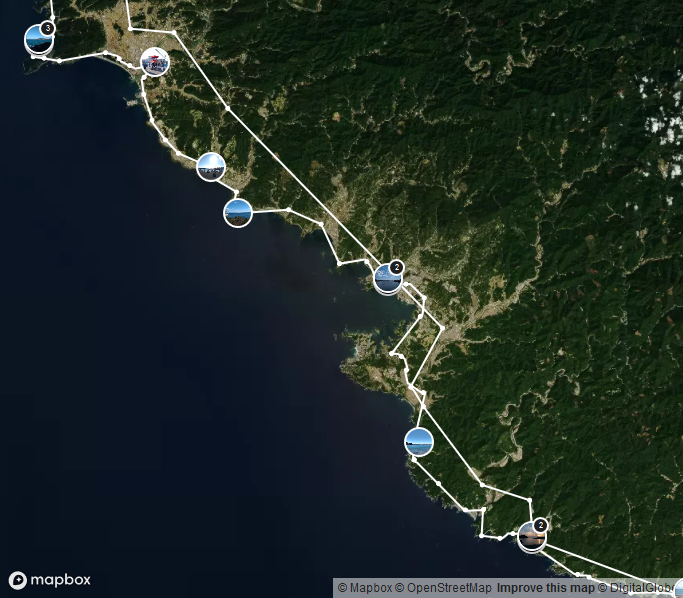
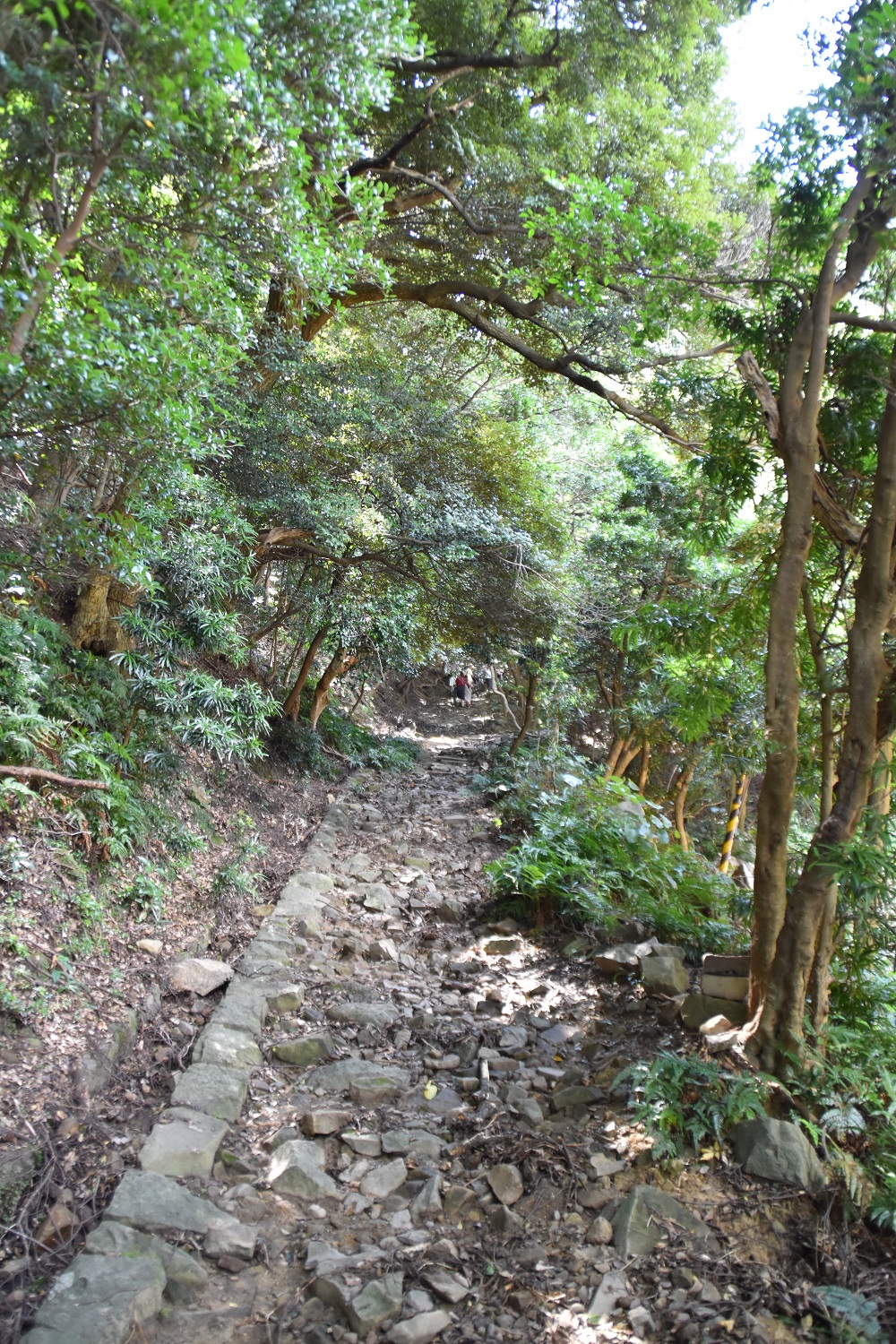
The sky is clear this morning, and while we are having our breakfast in the hotel restaurant, we are evaluating the path for the day. We will reach Wakayama, and along the way we have the option to hop on a train, should we need it for any reason. But we also have plenty of small coastal roads to enjoy, meaning that we will have no traffic pestering us.
Few hundreds meter after the hotel we stumble in a small ceremony: in the yard in front of a garage, there is a group of people, no more than 20, dressed in traditional clothes, with flags and a sort of sedan chair. It looks like some matsuri is going to start soon, so we stop to see what is going to happen.
And this is what we see, and how we interpret it: 4 kids, wearing demon masks, sit on the sedan and start chanting while hitting a drum with a block of wood they hold in their hands, like they wanted to cast a curse on the village. Immediately 16 men lift the sedan and start shaking it, to stop the demons from chanting, and indeed the demons collapse for the shaking. Then another man negotiate with the demons: they will stop the shaking only if they turn the curse into a blessing. Once the demons agree, humans and demons start chanting, while the sedan is carried around in the village.
The same ceremony is happening in all the neighborhood we cross along the way, as we understand from the flags scattered around and by chants we hear here and there. Once we are out of the city, the landscape suddenly changes: rocky cliffs high on the sea, deep blue waters and blue sky fill our eyes, with here and there the green of the trees.
On some rocks scattered in the sea we see some people with a fishing line, probably transported there by someone with a boat. It must be a funny experience if the weather should suddenly change!
When we reach a small fishermen village, we see that the same thing is going on here, but instead of using rocks, people are sitting on square rafts floating in the bay, enjoying the sun and the quietness, while on the beach someone is setting up some stands to sell food.
From there the road goes back onto the coast and reaches again a slightly bigger village, where there is also a coast guard base, with a broken helicopter stationed in front of it. We are not able to tell if the damage is recent or not, and to avoid any problem I avoid using my camera to zoom in for more details.
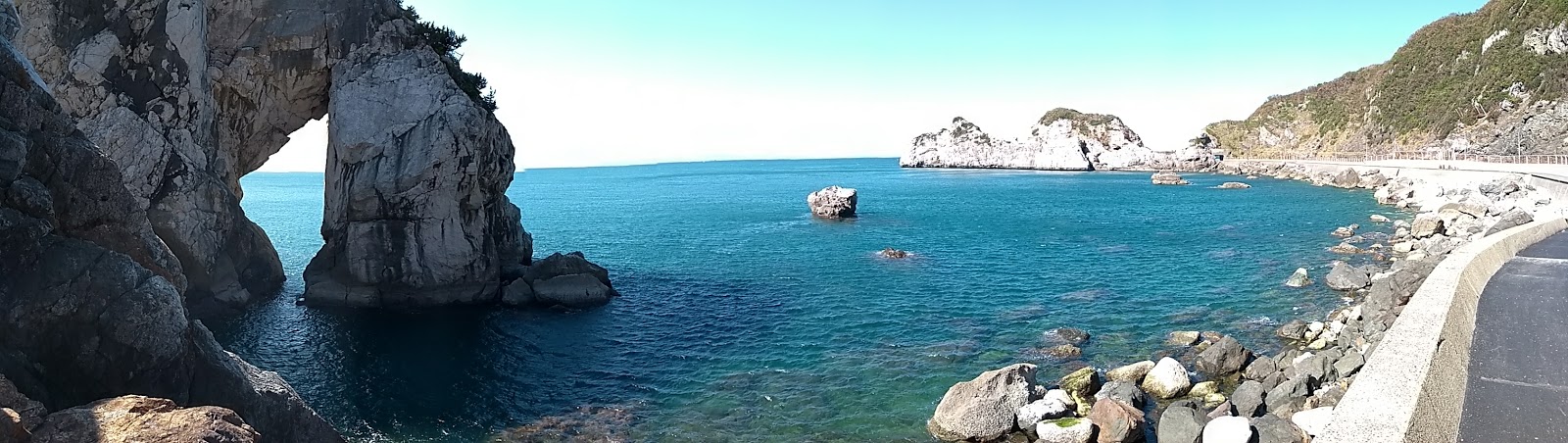
On the side of the road we start to see signs pointing to a coast park, which should be few kilometers ahead. Before reaching it we are flabbergasted by a white rocky arch, cast into the sea right in front of us, while in the distance the same white rocks paint the coast line for as long as we can see.
From there we reach a short tunnel where we get a surprise: the coastline was, so far, shielding us from the north wind blowing today, but now that we are crossing to the other side, we are whipped by a strong head wind that makes it hard to pedal. And to make things worse, the tunnel just channel the wind to make it stronger. Immediately after the tunnel there is the entrance for the park, which unfortunately is closed today.
While we taking a short break we evaluate how to proceed, and we decide that, once in Yuasa, we will hop on the train to Wakayama: our knees are aching, and the head wind for the coming kilometers is not going to make things better. But until then we have to bike: first the cross some tunnels that allow us to avoid some climb, then we go inland where at least we are protected from the wind.
While we are checking our maps in Yura town we are reached by a group of three Japanese cyclists, two men and a woman, who start climbing the hill in front of us. We have to take their same road, thus we start chasing them. The two men are way ahead, while the woman is proceeding more slowly; when I reach the pass and stop to wait my travel mate, they are also waiting for their companion to catch up. While they are smoking a cigarette we exchange some words, I explain them about our trips and they are quite surprised. They also check the panniers, and observe that make the bike heavier.
My travel companion reaches the pass before their, so we greet them and move on, reaching Kurao Bay and then the outskirts of Yuasa. We reach the train station, check for the next train and decide we have time to buy our lunch. We reach for the nearest combini and then back to the station, where we pack our bikes and take the train to Wakayama. Few days ago we were here heading South in a chilly morning, and now we are heading North in a warm noon.
What we see from the train windows hints that we might have taken the right decision: it looks like the coast between Yuasa and Wakayama is mostly industrial, with factories all around, thus not the most pleasant place to ride across.
Once we step down in Wakayama, we are struck by the difference between the two cities: while Yuasa was, at the end, a calm countryside town, Wakayama is a much more busy city, with people running around, traffic and noise. We manage to find a corner where we can assemble back our bikes, and then reach Tsukiji Hostel Wakayama where we will stay. The place is located on a small side road of a shopping street, which at the time we arrive is crowded with people. The room are cozy and the staff really friendly, it will be a pleasure staying here.
While the tenants is showing us around the house, I spot on the door of another room a name which is strangely familiar: I give a better read, and indeed it belong to a person we know. When in 2016 we cycled around Shikoku, we prepared our trip also by watching the YouTube video about his experience posted by I.B. We meet him on the door, while we are going out and he is coming back in: we introduce ourselves (of course he doesn't know who we are), and explain him about our present and past trips. He has been to Koyasan, too.
We don't bother him any longer and proceed to the close by onsen, which has been recommended by the tenants. It is indeed the best we have visited so far, and soaking into the hot waters is really refreshing. There are many choices of waters, and we try them all, except the cold one. Actually, I just pour some cold water on my legs, but I don't dare sitting down until my neck.
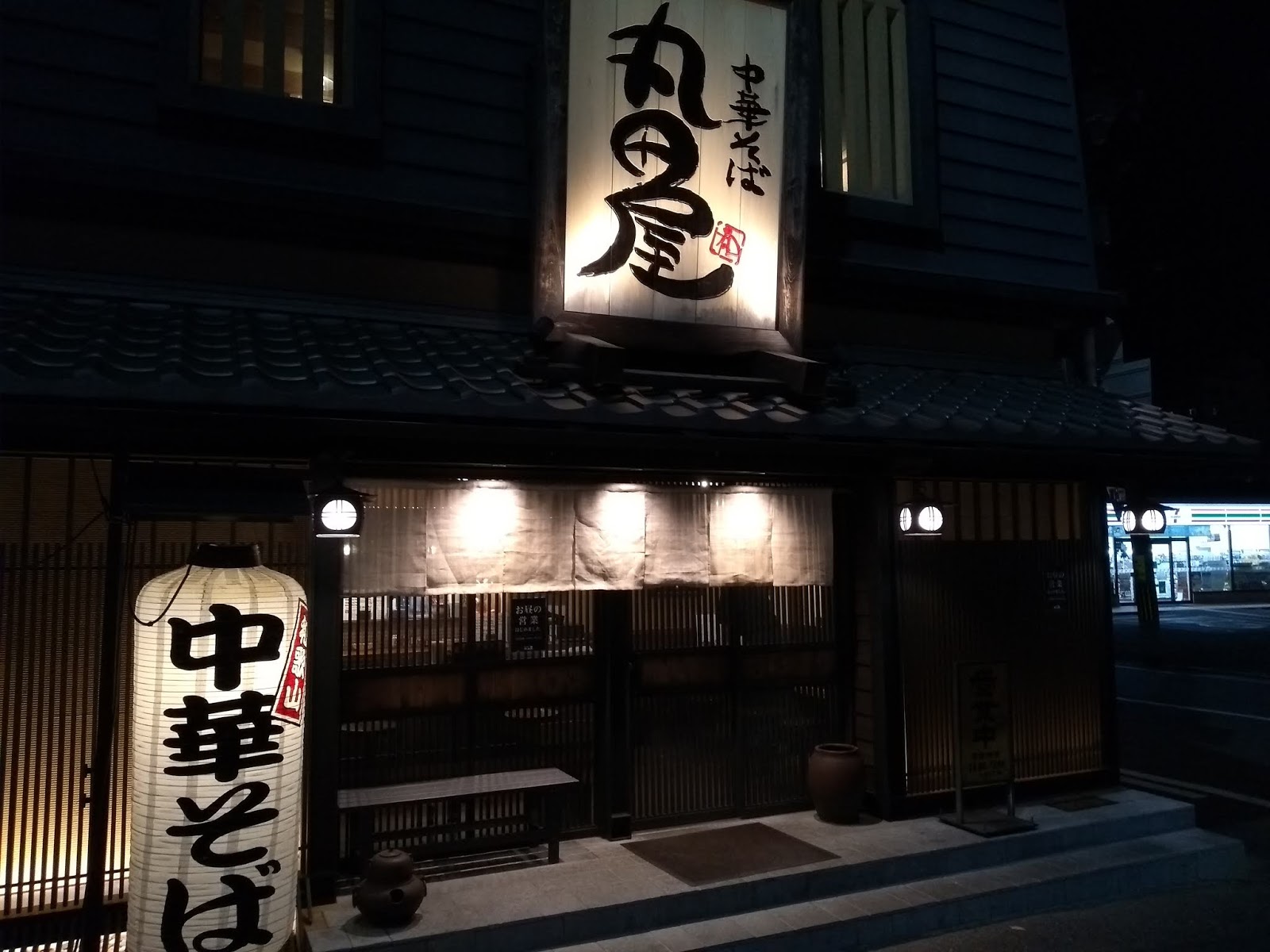
From there we move on to try the local specialty: Wakayama style ramen! We find a place called Chukasoba and when we are walking there we are deafened by the loud noise of birds going to sleep on the trees in the middle of the road. They are so loud that we can barely ear the cars engines! Once we reach the place we take a table: as we were told, boiled eggs are available for consumption at leisure, but we want to try the ramen. While we wait for our order, a group of four people sits next to us: they must be mother, daughter, son and his girlfriend. They are served after us with our same serving, but by the time we are barely halfway through our bowl, they are already leaving.
If I will ever get to date a Japanese woman, I need to learn if eating at super-speed in a restaurant is appreciated or not! 😅
We stop by a conbini, buy an ice cream and something for our breakfast, and then take a slow stroll until the hostel: the shopping road is now silent, only few people are walking back to their destination, while someone calmly play a guitar.
Tomorrow we will take a day of rest from biking: we will just visit the city and relax. But today has already been a good day.
Visualizzazione post con etichetta sea. Mostra tutti i post
giovedì 30 maggio 2019
venerdì 10 maggio 2019
Day 13: the oceanside from Susami to Gobo
With still in the eyes the sunset we have seen yesterday, when we look outside the window of our room in the morning we are blinded by the clear sky and the light already flooding the coast. Today we will reach Gobo and will try, as much as possible, to take the small roads siding route 42.
The first chance to do it comes immediatly out of Susami, where the main road goes through two tunnels while the side road we take goes (and climb) around the cliff, giving us a good view on the sea and also an early warm up for our legs. From the cliffs the view on the ocean is wonderful, and the clear sky makes the water look dark blue, with just some waves in the distance breaking the color with touches of white.
Further on we are forced to rejoin route 42, and when we reach Tsubaki we see that the city has a lot of natural hot springs on the coast. Too bad that, so early in the morning, there is no way to use them. As very partial compensation, we use the post office to withdraw some cash. Then we reach Shirahama, were our plan would be to visit Toretore village, a place famous for having panda shaped houses. But we don't know that the place is a residence and it's not open to public visits, as the gatekeeper explains us with a grumpy face when he stops us. Shortly after moving away from there, when we are stopping at a vending machine to buy something to drink, a group of motorcyclists greets us with great enthusiasm.
We stop for lunch in a park next to a temple, where, together with us, there are a couple of moms playing with their kids, and a group of elderly people talking among themselves. As soon as we park our bikes, two of them begin examining them, judging the gears, the panniers, the saddle and all the equipment, then they decide that is time to inquiry us about our trip. Once received the needed information, they start over discussing among them.
After our lunch break we have to move on, and we climb again on the cliffs, where the road goes parallel to the coast. We stop in a service station to have an ice cream, much needed considered the hot temperature, and there we are greeted once again by another group of motorcyclists. They ask us about our trip, and to me this is quite surprising: I am used to motorcyclists looking down on their motorless cousins 😄.
When we descend again around sea level we are almost in Gobo, and we are welcomed by a small traffic jam, due to a car accident on the road. We go around it and rapidly reach our destination: Gobo Forest Inn.
It's a business hotel, so we do not expect anything excessively fancy. However, to our disappointment, they have a male only onsen (so, if you are a woman, settle down for a shower), and when we ask them if we can fill our bottles with water from the dispenser, they answer with a "Yes, but just a little". But at least they have a restaurant where we can have a good dinner, so we just take the good things, preparing for the next day.
The first chance to do it comes immediatly out of Susami, where the main road goes through two tunnels while the side road we take goes (and climb) around the cliff, giving us a good view on the sea and also an early warm up for our legs. From the cliffs the view on the ocean is wonderful, and the clear sky makes the water look dark blue, with just some waves in the distance breaking the color with touches of white.
Further on we are forced to rejoin route 42, and when we reach Tsubaki we see that the city has a lot of natural hot springs on the coast. Too bad that, so early in the morning, there is no way to use them. As very partial compensation, we use the post office to withdraw some cash. Then we reach Shirahama, were our plan would be to visit Toretore village, a place famous for having panda shaped houses. But we don't know that the place is a residence and it's not open to public visits, as the gatekeeper explains us with a grumpy face when he stops us. Shortly after moving away from there, when we are stopping at a vending machine to buy something to drink, a group of motorcyclists greets us with great enthusiasm.
We stop for lunch in a park next to a temple, where, together with us, there are a couple of moms playing with their kids, and a group of elderly people talking among themselves. As soon as we park our bikes, two of them begin examining them, judging the gears, the panniers, the saddle and all the equipment, then they decide that is time to inquiry us about our trip. Once received the needed information, they start over discussing among them.
After our lunch break we have to move on, and we climb again on the cliffs, where the road goes parallel to the coast. We stop in a service station to have an ice cream, much needed considered the hot temperature, and there we are greeted once again by another group of motorcyclists. They ask us about our trip, and to me this is quite surprising: I am used to motorcyclists looking down on their motorless cousins 😄.
When we descend again around sea level we are almost in Gobo, and we are welcomed by a small traffic jam, due to a car accident on the road. We go around it and rapidly reach our destination: Gobo Forest Inn.
It's a business hotel, so we do not expect anything excessively fancy. However, to our disappointment, they have a male only onsen (so, if you are a woman, settle down for a shower), and when we ask them if we can fill our bottles with water from the dispenser, they answer with a "Yes, but just a little". But at least they have a restaurant where we can have a good dinner, so we just take the good things, preparing for the next day.
mercoledì 24 aprile 2019
Day 12: the hawks soaring on the Ocean
Yesterday we fell asleep listening to the practicing choir, and today we wake up with the city speakers diffusing something which we are not able to understand, but it sounds like a female voice singing some public service announcement.
While we enjoy our breakfast and savor some of the dishes prepared by the landlady (she is a really skilled cook), we try to plan our route, as usual. We have to options: we will start on the coast until Kushimoto, and then from there we can either continue on the coast until Susami on route 42, or go inland though the mountains and reach Susami through routes 371 and 38. The latter is about 20 km longer and has, necessarily, more climbs, but on the map it looks less subject to traffic. We have a preference for the coastal route, but we will take the final decision after Kushimoto.
We greet the landlady and start moving: there is no bike lane and we have to take our space between the concrete barrier on our left and a steady flow of trucks and cars on our right: from time to time, when the shoulder is broad enough to let us cycle there it's refreshing. However the sight on the Ocean is amazing: the sky is deep blue and the water reflects this color, together with the bright light of the sun. When we reach the Hashiguiiwa Rocks the view is astounding, and we are not the only ones to enjoy it: the parking lot is full of cars and bus, with people searching for a spot to take pictures.
From there we see the bridge taking to Kii Oshima, which we want to reach immediately afterwards. We reach the ramp leading to the bridge by crossing the harbor, and when we are on the bridge we are struck by the wind: until now we were protected by the orography of the place, but now, after the cape (and on this island protruding into the Ocean) we are just mercilessly exposed.
On top of that the road cuts across the island without too much attempts of mitigating the slopes, and so we have to take some dose of climbing to reach the Kushimoto Turkish memorial museum. According to the history, a Turkish vessel had a shipwreck on this coast at the end of XIX century, and the islanders helped the crew to reach safety. In memory of that a statue of Ataturk faces the Ocean, right next to the lighthouse, and some shops sell Turkish souvenirs, like carpets and water pipes.
When we are parking our bikes a group of students walks next to us, and one of their teacher asks me about our trip. I explain him that we are touring Kansai on our bikes, and he is really surprised when I tell him that we are using our entire 3 weeks vacation to do this trip: he thanks us for dedicating so much time to this region, and goes to his students to tell them what he has been told from us, and when they walk back to their bus, they all wave at our direction. We have become celebrities once again!
After this random meeting we climb on the lighthouse and enjoy the view on the Ocean: the waves continuously splash on the rocks at our feet, making the water white from the foam, while several hawks fly high in the sky, drifting in the strong wind that knows no obstacles here. In the distance several ships cross the sea, going somewhere under the bright sun. This place during a storm might be surely terrific!
We take some pictures and then get back on the road: we have to face again the climbs we have met coming here, and the sun has become hotter. We decide that we will take the coast route, preferring the shortest path, but we soon kind of regret it: until we reach Esumi, where the expressway starts, the traffic grows bigger, and the cycling lane, when present, has the unappealing feature of being on the right side of the road and, if that wasn't already enough, whoever designed it decide that it is fine to stop it in the middle of curve when the road is rising. For sure we don't want to bet our lives with such a crossing, and we keep our left side of the road.
We stop for lunch at a marine park, where we find some benches were we can sit. Having more time we could also visit the underwater tower, allowing to see the bay. After the expressway the traffic practically disappears, and we can enjoy the view and the head wind blowing on our faces. The views on the Ocean are, once again, stunning, and from the time to time we see boars or deer peeking through the bushes on the hills on our right.
We reach Susami in the afternoon, about one hour before sunset: Sunset Hotel is well equipped for cyclists (it has bike racks in the main all for those who want to park their bike overnight) and, being located on the harbor, offers a fantastic view on the setting sun, as its name suggests.
We run to the supermarket to buy some food for dinner and then stay in harbor to enjoy the falling night. Then we take a relaxing bath in the onsen and have dinner in our room. All in all we are glad we have taken the coastal route: we didn't have to rush to avoid the darkness, and the road was pleasant after the expressway. We are just left with the curiosity on how would the other path might have been.
While we enjoy our breakfast and savor some of the dishes prepared by the landlady (she is a really skilled cook), we try to plan our route, as usual. We have to options: we will start on the coast until Kushimoto, and then from there we can either continue on the coast until Susami on route 42, or go inland though the mountains and reach Susami through routes 371 and 38. The latter is about 20 km longer and has, necessarily, more climbs, but on the map it looks less subject to traffic. We have a preference for the coastal route, but we will take the final decision after Kushimoto.
We greet the landlady and start moving: there is no bike lane and we have to take our space between the concrete barrier on our left and a steady flow of trucks and cars on our right: from time to time, when the shoulder is broad enough to let us cycle there it's refreshing. However the sight on the Ocean is amazing: the sky is deep blue and the water reflects this color, together with the bright light of the sun. When we reach the Hashiguiiwa Rocks the view is astounding, and we are not the only ones to enjoy it: the parking lot is full of cars and bus, with people searching for a spot to take pictures.
From there we see the bridge taking to Kii Oshima, which we want to reach immediately afterwards. We reach the ramp leading to the bridge by crossing the harbor, and when we are on the bridge we are struck by the wind: until now we were protected by the orography of the place, but now, after the cape (and on this island protruding into the Ocean) we are just mercilessly exposed.
On top of that the road cuts across the island without too much attempts of mitigating the slopes, and so we have to take some dose of climbing to reach the Kushimoto Turkish memorial museum. According to the history, a Turkish vessel had a shipwreck on this coast at the end of XIX century, and the islanders helped the crew to reach safety. In memory of that a statue of Ataturk faces the Ocean, right next to the lighthouse, and some shops sell Turkish souvenirs, like carpets and water pipes.
When we are parking our bikes a group of students walks next to us, and one of their teacher asks me about our trip. I explain him that we are touring Kansai on our bikes, and he is really surprised when I tell him that we are using our entire 3 weeks vacation to do this trip: he thanks us for dedicating so much time to this region, and goes to his students to tell them what he has been told from us, and when they walk back to their bus, they all wave at our direction. We have become celebrities once again!
After this random meeting we climb on the lighthouse and enjoy the view on the Ocean: the waves continuously splash on the rocks at our feet, making the water white from the foam, while several hawks fly high in the sky, drifting in the strong wind that knows no obstacles here. In the distance several ships cross the sea, going somewhere under the bright sun. This place during a storm might be surely terrific!
We take some pictures and then get back on the road: we have to face again the climbs we have met coming here, and the sun has become hotter. We decide that we will take the coast route, preferring the shortest path, but we soon kind of regret it: until we reach Esumi, where the expressway starts, the traffic grows bigger, and the cycling lane, when present, has the unappealing feature of being on the right side of the road and, if that wasn't already enough, whoever designed it decide that it is fine to stop it in the middle of curve when the road is rising. For sure we don't want to bet our lives with such a crossing, and we keep our left side of the road.
We stop for lunch at a marine park, where we find some benches were we can sit. Having more time we could also visit the underwater tower, allowing to see the bay. After the expressway the traffic practically disappears, and we can enjoy the view and the head wind blowing on our faces. The views on the Ocean are, once again, stunning, and from the time to time we see boars or deer peeking through the bushes on the hills on our right.
We reach Susami in the afternoon, about one hour before sunset: Sunset Hotel is well equipped for cyclists (it has bike racks in the main all for those who want to park their bike overnight) and, being located on the harbor, offers a fantastic view on the setting sun, as its name suggests.
We run to the supermarket to buy some food for dinner and then stay in harbor to enjoy the falling night. Then we take a relaxing bath in the onsen and have dinner in our room. All in all we are glad we have taken the coastal route: we didn't have to rush to avoid the darkness, and the road was pleasant after the expressway. We are just left with the curiosity on how would the other path might have been.
domenica 10 febbraio 2019
Day -1: Okinoshima, or the island which inspired Laputa
Not surprisingly, we wake up pretty early.
After a good breakfast, we walk in the sleepy roads of a Sunday morning Osaka. The only other people walking are also early birds going to catch the train for somewhere. The empty roads seems also resting after a lively Saturday night.
We take the train to Kada, where we will then move to the boat carrying visitors to Okinoshima. The island, right in the middle of the Tomogashimasuido strait, was in the past used as observation point by the Imperial Navy, and the now abandoned buildings give to the place a quite unique atmosphere, which has inspired Studio Ghibli's Laputa, castle in the sky.
The more the train travels South, the more remote the places appears and the less people remain on the train. We see the mountain ranges we will be crossing in the coming days, and they look quite challenging.
The traces of the typhoon are still visible: shored garbage, fallen trees and soil carved by the flowing water. Some paths are even closed. Whenever the wind cannot reach, the warm and humid air feels like a cape. We have to measure our effort to not be drenched in sweat.
After a good breakfast, we walk in the sleepy roads of a Sunday morning Osaka. The only other people walking are also early birds going to catch the train for somewhere. The empty roads seems also resting after a lively Saturday night.
We take the train to Kada, where we will then move to the boat carrying visitors to Okinoshima. The island, right in the middle of the Tomogashimasuido strait, was in the past used as observation point by the Imperial Navy, and the now abandoned buildings give to the place a quite unique atmosphere, which has inspired Studio Ghibli's Laputa, castle in the sky.
The more the train travels South, the more remote the places appears and the less people remain on the train. We see the mountain ranges we will be crossing in the coming days, and they look quite challenging.
But it's still early to worry about that. Today we are walking on a remote island. When we reach Kada the station is really small: a single track and a steel gate, with a small desk with a stamp, of which we are not able to understand the scope. The sun flooded village is really quite, and we walk to the harbor through empty streets.
The dock where the boat boards the visitors is the only busy place. We are the only gaijin to be there, and we have the clear impression it's not so common for two foreigners to be there: the only person in the queue capable of speaking English helps the lady at the ticket counter by translating for her that the boat runs every hour, and the last departure from the island is at 4:00 p.m.
We buy some drinks and some food, since on the island they are not available, then wait patiently in the queue.
The boat is packed with people, and the chairs are not exactly sized for a tall westerner. From the windows we see a lot of fishing boats gathered among the waves, and when we finally land on the island we really feel on a remote place.
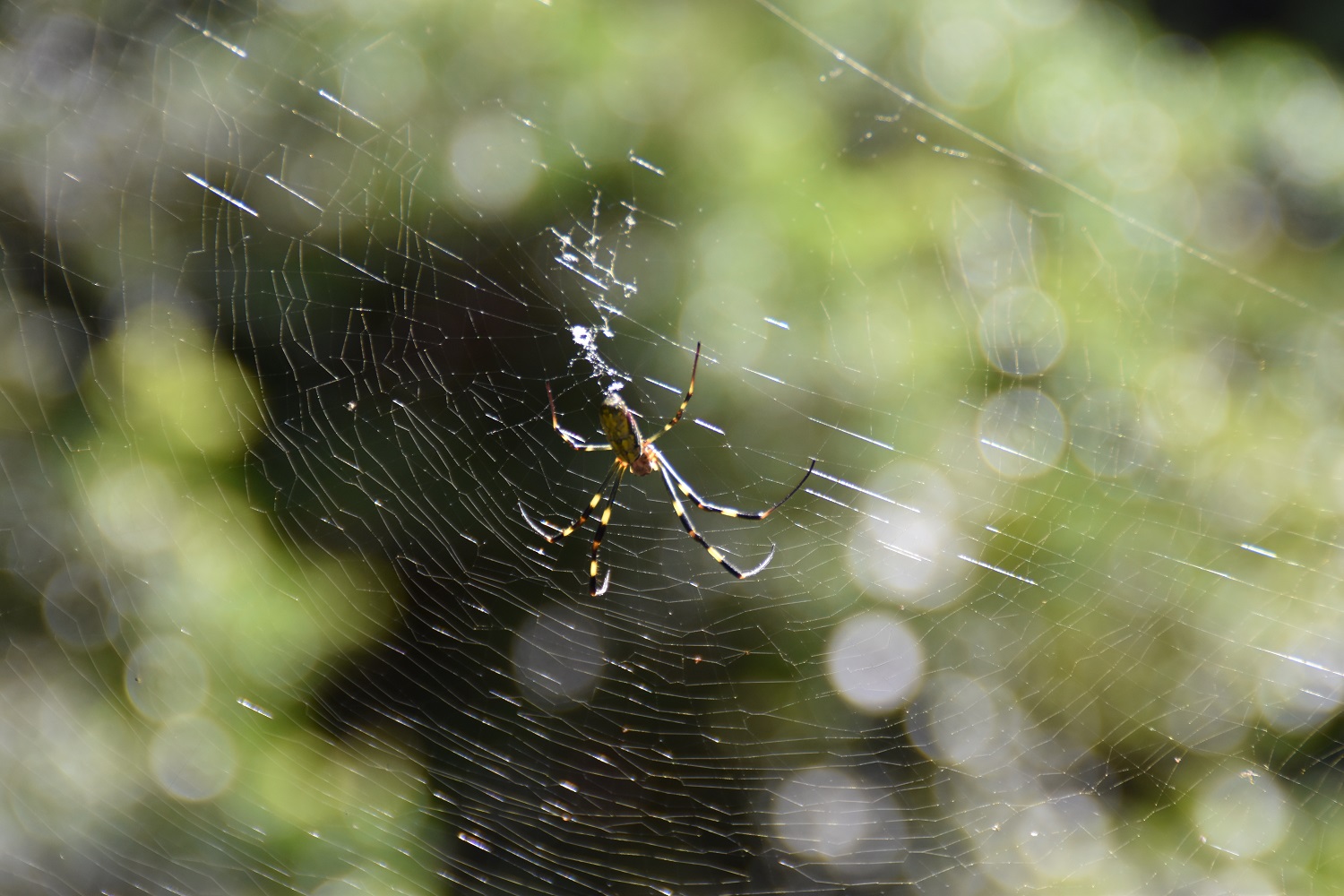
The vegetation is luxurious, and we lose count of how many spiders and giant hornets we spot. The side of the path is also covered by countless apertures looking like caves, but we don't dare venturing in: we have no lights with us. When we finally reach the abandoned buildings on the top of the hill, the place looks magic and the view is astounding. Red bricks buildings, moss and ivy clinging on the moisture dripping walls, with short moments of silence when we are the only to be around.
We take a sit on one the benches scattered around and have our lunch there, on the top of the island. While we eat our onigiri, some people prepare a warm noodle cup lighting up a camp burner with a small pan to boil some water.
Continuing on the path circuiting the island we walk by the old lighthouse building, which cannot be accessed, and then find the ruins of some restaurant. We cannot tell if it has been damaged by the recent typhoon or has it been abandoned years ago. In any case its gloomy appearance strikes with the solemnity of the red bricks ruins.
We reach the pier with just few minutes before the boat departure, which we spend sitting below some pine trees. Once we manage to reach the station, we have the luck of boarding the Medetai train, which is a train painted like a sea bream. The stamp we found at the station was about this train, as we realize now.
Since it is still quite early, we decide on the spot to use that train to reach the station of Wakayamashi, and from there the Castle of Wakayama. The next time that we will be in the city it will be on our bikes and we don't know how much time we will have for visiting around, therefore we want to be sure to have a calm visit to the monument.
The surrounding of the castle are full of people busy arranging many small candles according to some predefined path. Apparently there is going to be some sort of festival in the night, involving images made with candles. As another shot of luck, today is the day when access to the castle is free, therefore we don't miss the chance of visiting it.
The museum inside is interesting, and the view from the top, with sun starting to set on the bay, is amazing. We regret that we have to leave before the festival begins, but we are glad we have been able to enjoy the place.
The train goes back across the mountain ranges and then into Osaka, and sooner than expected we are back to the busy Sunday evening of a big city. On the way back to the guest house we stop for dinner at a small restaurant specialized in tonkatsu. The only interaction with the staff is when we give them the tickets we bought at the vending machines to order our dinner, and when they bring the dishes at our table. For the rest we are basically alone, with other customers having their dinner without paying attention to the humanity surrounding them.
We walk back to the guest house in the pleasant chill of the evening, we buy some snacks at the combini and then prepare as much as possible for the next morning. Tomorrow is the day we will pick up our bikes. Tomorrow we will hit the road.
It's not hard to imagine how the life of a soldier was here, constantly gazing at the horizon and checking the ships crossing the sea, under the sun or under the rain with the constant shouting of the supervisors.
We take a sit on one the benches scattered around and have our lunch there, on the top of the island. While we eat our onigiri, some people prepare a warm noodle cup lighting up a camp burner with a small pan to boil some water.
Continuing on the path circuiting the island we walk by the old lighthouse building, which cannot be accessed, and then find the ruins of some restaurant. We cannot tell if it has been damaged by the recent typhoon or has it been abandoned years ago. In any case its gloomy appearance strikes with the solemnity of the red bricks ruins.
We reach the pier with just few minutes before the boat departure, which we spend sitting below some pine trees. Once we manage to reach the station, we have the luck of boarding the Medetai train, which is a train painted like a sea bream. The stamp we found at the station was about this train, as we realize now.
The surrounding of the castle are full of people busy arranging many small candles according to some predefined path. Apparently there is going to be some sort of festival in the night, involving images made with candles. As another shot of luck, today is the day when access to the castle is free, therefore we don't miss the chance of visiting it.
The museum inside is interesting, and the view from the top, with sun starting to set on the bay, is amazing. We regret that we have to leave before the festival begins, but we are glad we have been able to enjoy the place.
The train goes back across the mountain ranges and then into Osaka, and sooner than expected we are back to the busy Sunday evening of a big city. On the way back to the guest house we stop for dinner at a small restaurant specialized in tonkatsu. The only interaction with the staff is when we give them the tickets we bought at the vending machines to order our dinner, and when they bring the dishes at our table. For the rest we are basically alone, with other customers having their dinner without paying attention to the humanity surrounding them.
We walk back to the guest house in the pleasant chill of the evening, we buy some snacks at the combini and then prepare as much as possible for the next morning. Tomorrow is the day we will pick up our bikes. Tomorrow we will hit the road.
Iscriviti a:
Post (Atom)